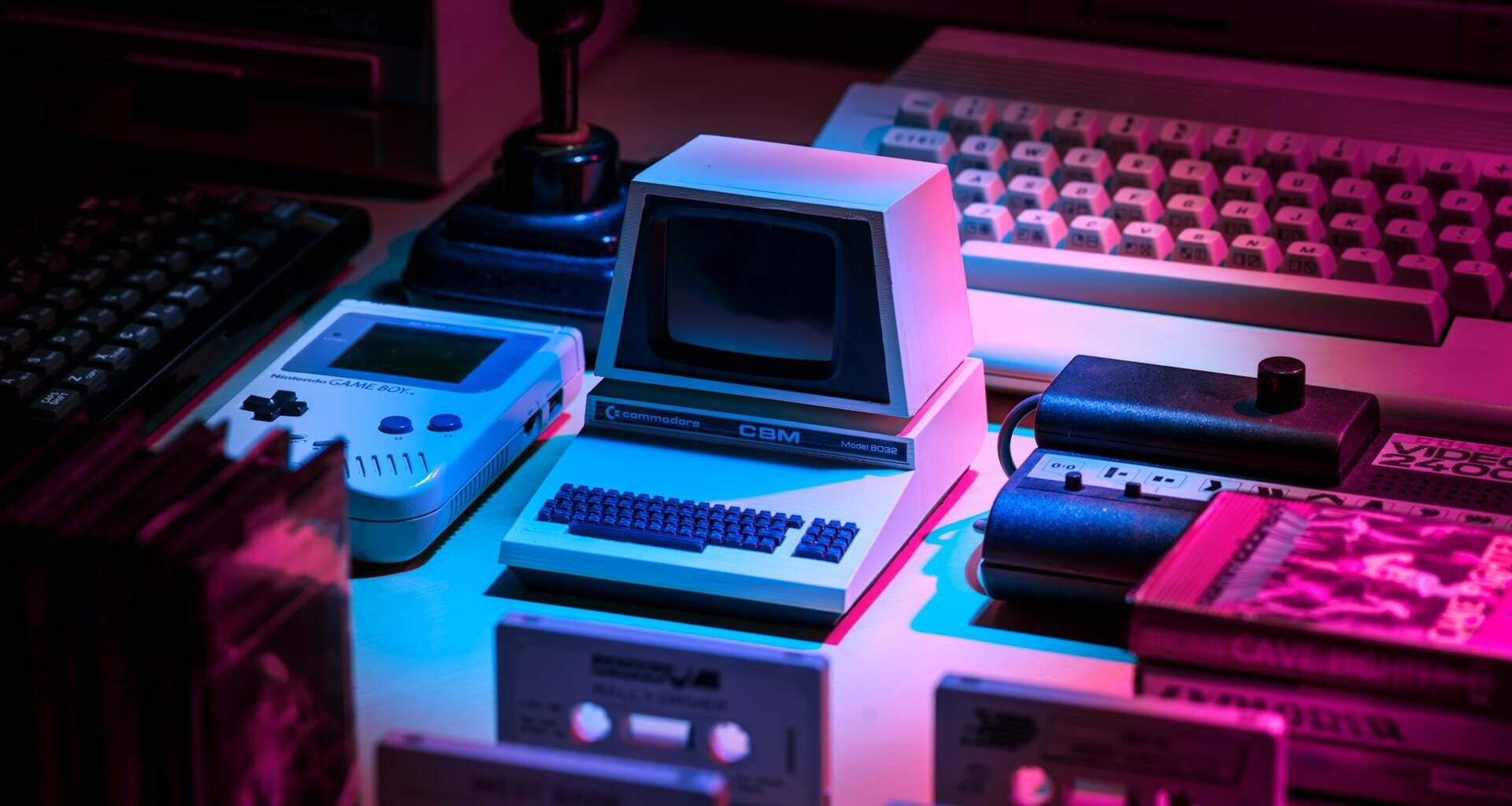
Anemoia, a coinage from the writer John Koenig – author of The Dictionary of Obscure Sorrows – refers to a feeling of nostalgia for a time one didn’t live through. I previously wrote about why this feeling arises, namely, by connecting it to Daniel Laidler’s concept of hagioptasia: the tendency to project ‘specialness’ onto certain aspects of life, such as one’s childhood. I think, however, much more can be said as to how anemoia arises and its effects on individuals and culture, as well as how individual and cultural factors influence the expression of anemoia.
First, it’s worth asking, what is anemoia’s relationship to identity? Is it purely an imaginative construct, or can it serve to strengthen a sense of identity continuity – connecting one’s present self to the past – similar to traditional nostalgia?
I would argue that anemoia is both imaginative and (often) congruent with identity. While traditional nostalgia is based on events one did experience (which feel connected to one’s identity), anemoia is based on events one didn’t experience (but they still seem connected to one’s identity in some way). After all, the time periods that trigger anemoia will differ between people, based on the kinds of people they are, and what their values, interests, and desires are. Some might be nostalgic for the 90s, even if they weren’t born then, because of the music and fashion, whereas others are nostalgic for the 60s, for similar reasons. Some of these differences are generational and cultural, too, which is also related to one’s identity: for example, Gen Z culture is nostalgic for the Y2K aesthetic. In short, the object of people’s anemoia can help to reveal individual and cultural identities.
At the same time, it’s important to acknowledge the role of imagination in anemoia: the nostalgia for times not experienced can be prone to the projection of one’s biases into the past, whereby we exaggerate the positives and overlook the negatives. We might feel nostalgic for pre-smartphone eras (justifiably, for many reasons), but we might also neglect the social and moral backwardness of these times as well. On the other hand, normal nostalgia is likewise prone to rose-tinted glasses, particularly with respect to nostalgia about childhood. I would be curious to know the relative differences between anemoia and traditional nostalgia in terms of expressions of cognitive biases, such as Pollyannaism (or the positivity bias).
Anemoia can also influence our attitudes and behaviour in all sorts of ways, based on the specific object of this emotion. It may affect our preferences, consumption choices, and perhaps even our moral and ideological positions. I would argue that it is not always or simply an aesthetic or emotional experience, devoid of normative content or real-life or behavioural effects.
If we return to the idea of Gen Z’s nostalgia for the Y2K aesthetic, this certainly influences preferences and aesthetic choices, such as clothes that match a grunge, goth, nu-metal, or emo aesthetic. This affects the consumption of music as well, with older bands seeing a surge in popularity because of anemoia, such as Deftones and Korn, as well as newer bands that have encapsulated the grunge, nu-metal, metalcore, shoegaze, post-hardcore, and emo sounds of the 90s and 2000s.
Anemoia, if it leads to a return to a cultural past in some way, could be considered hauntological. Hauntology is a term coined by the French philosopher Jacques Derrida in his 1993 work The Spectres of Marx, and later explored by the writer Mark Fisher, which refers to the persistence of cultural elements from the past. These elements ‘haunt’ the present, like ghosts, signalling a nostalgia for lost futures – for unrealised utopias. (Under this view, the Y2K aesthetic of the 2000s has returned because one of its main components is futuristic optimism and techno-utopianism.)
Fisher focused heavily on music, particularly electronic music, with respect to hauntology, and argued that modern culture recycles ideas and aesthetics from the past because it cannot imagine a new future. He claimed that this inability to imagine and create the new was the stifling effect of neoliberalism, since it presented itself as the only viable system, thus causing a ‘slow cancellation of the future’. Fisher referred to this ‘no alternative’ ideology as capitalist realism.
Since anemoia is backwards-looking – and perhaps prone to inject the past into the present – it appears to be in opposition to what my friend and fellow writer Matt Bluemink calls anti-hauntology. This concept is a response to Fisher’s pessimism and highlights examples of the novel (e.g. the musical artists SOPHIE, Arca, and Iglooghost), and advocates for imagining and making new futures and aesthetics. You can read more about anti-hauntology in Bluemink’s forthcoming book, The Future is not Lost: On Music, Technology, and the Creation of New Worlds (Becoming Press).
Has anemoia increased because of the reality that Fisher diagnosed? Could the fascination with this newly coined emotion have an unacknowledged dark side – the overlooking of the new and our innate desire to create the new? Would the more hopeful vision of anti-hauntology make experiences of anemoia less likely, and, if so, would this be a positive thing? After all, some research suggests that nostalgia increases optimism. Perhaps alongside the harmless and beneficial experiences of anemoia we can imagine a similar feeling, but one which is forward-looking: a feeling of warmth and longing for a better future not yet lived. We could call this mellonoia – pronounced mello-noya – from the Greek mellon for ‘future’ and noia for ‘mind’, which together mean ‘future mind’. We can consider mellonoia to be an affect of optimism or hope. Whether this emotion is anti-hauntological or utopian would depend on the kind of future we’re imagining.
Regarding people’s moral and ideological positions in the modern age, I think there is perhaps an element of anemoia in the resurgence of gender-based conservatism, as promoted in the manosphere. Manosphere influencers may be harnessing the power of anemoia to persuade boys and young men to embrace older (and harmful) views about men and women. Anemoia may also be feeding the ‘tradwife’ trend.
The interaction between anemoia and ideology occurs (and has long occurred), too, with the ‘hippie values’ of the 60s: modern hippies and New Agers may look back on this time through the lens of anemoia, believing those original hippies embodied an ideal mindset and lifestyle. Nostalgia for times not experienced may influence people’s thoughts on the moral values and behaviours they deem wrong with current society, and those we should return to.
Anemoia raises many psychological questions that researchers could tackle. Relevant questions about anemoia that could inform research include the potential therapeutic benefits of this emotion: Does it encourage greater levels of well-being, life satisfaction, optimism, and so on? Or might it encourage pessimism about the present and future by looking back on the past with rose-tinted glasses?
What are the potential dangers of excessive anemoia or anemoia directed towards morally problematic aspects of history? How do personality traits influence anemoia, or why are some people more prone to anemoia than others? This might look at the Big Five personality traits or potentially relevant tendencies such as hagioptasia and empathy (those who are highly hagioptasic and empathic may imbue the past with specialness more strongly and feel a deep connection to people in past eras, respectively).
How exactly does ordinary nostalgia differ from anemoia, in terms of affect, identity, or even brain activity? Patterns of anemoia could also be investigated, such as which time periods (and aspects of them) are most commonly the objects of this type of nostalgia. This could help answer questions about cultural trends today, as well as possibly lead to predictions about how future changes in society may influence expressions of anemoia.
