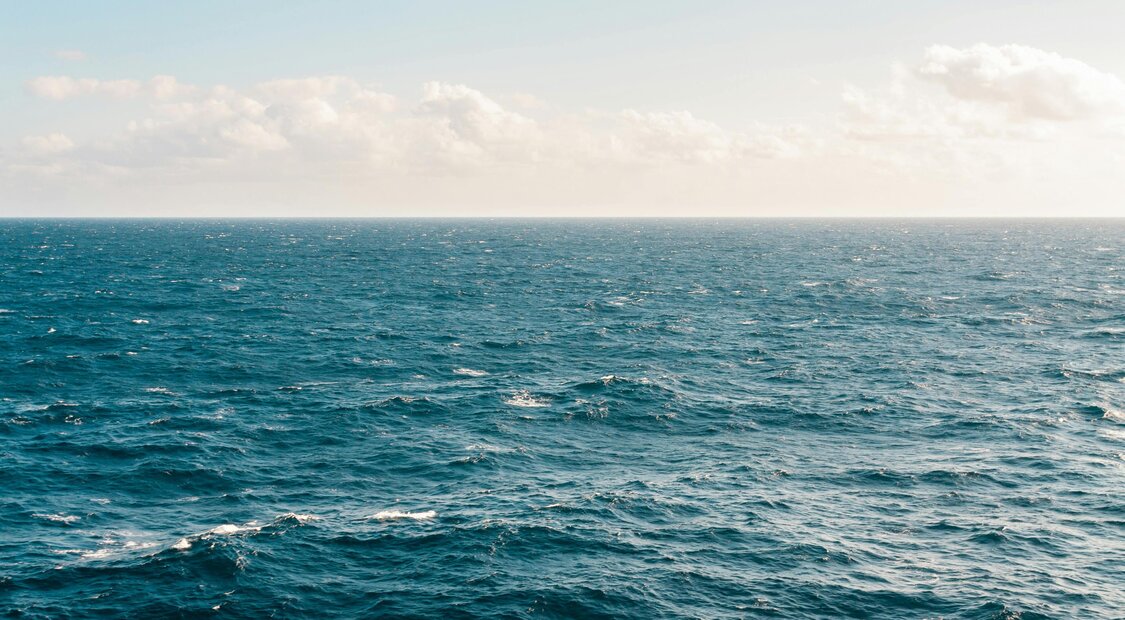
The ebb and flow of ocean waves has a naturally soothing quality to it. We all experience it; we all appreciate it. But why do ocean sounds relax us and calm the mind? One speculative hypothesis is that these sounds remind us of life in the womb. According to this hypothesis, the sound of waves, unconsciously, takes us back to the state of uterine bliss that we all experienced before birth. This universal experience, therefore, could help explain why ocean sounds universally feel so restorative: an unconscious memory or feeling of life in the womb is being restored, even though we do not consciously and explicitly recognise it as such.
In the book Blue Mind, author Wallace J. Nichols interviews Shelley Batts, a Harvard Medical School Senior Research Fellow who specialises in the effects of sound. She points out research on how pleasant sounds – including the regular wave patterns, harmonic pitch, and low volume of the sea – relax us and enhance our mood and concentration. Batts suggests these effects may be related to the time when we were most physically and intimately connected to another human – to our mothers before birth. She states:
We spend our first nine months underwater, hearing sound through water in the womb… We hear the whooshing of our mother’s heart, her breath going in and out, the gurgle of her digestion…
These fluid, rhythmic sounds are very much like the ocean. Perhaps that’s why the ocean often brings up feelings of relaxation and tranquility.
It’s a comforting and intuitive notion once one hears of it, although it may not be a plausible hypothesis. In chapter 3 of my new book, Altered Perspectives, which explores the idea that we can remember our uterine existence and birth, I point out that we currently have no scientific evidence to support this idea. There are certainly powerful subjective experiences that have perinatal themes, which can be elicited by psychedelics, as I describe in that chapter. Yet, according to our current scientific understanding, no one has memories of their life inside the womb. During this time, as well as the event of birth, the brain has not yet developed the capacity to create and store long-term memories (this capacity emerges when babies are around 18 months old). This, therefore, poses a challenge to the concept of ‘perinatal matrices’, developed by the psychologist Stan Grof. These refer to psychological and emotional experiences that occur during the prenatal and birth process, memories of which we can access later in life, during altered states of consciousness, which can help resolve current mental distress related to those early experiences.
Another speculative hypothesis on why we benefit from ocean sounds is the aquatic ape hypothesis. This seeks to explain certain human traits (e.g. our hairless bodies) by positing that early hominids lived in water at least part of the time (having hairless bodies would make us more streamlined for swimming). Our positive reactions to the sounds of the oceans and seas could be another clue that our early ancestors spent a significant amount of their time in water. However, many scientists have pointed out various flaws in the aquatic ape hypothesis (see here, here, and here).
In any case, the criticisms against this hypothesis don’t rule out the possibility that we are drawn to sea, ocean, and river sounds for evolutionary reasons. For example, human ancestors did make use of coastal and shoreline resources, so hearing the sound of water may be a reminder of being in or close to an environment that is potentially abundant in resources. Environments with water sources were where we could feel safe and have a greater chance of staying alive. As Michael Stocker – an acoustician and naturalist – says, “the sound of water means life.” So this could be why ocean sounds are comforting. On the other hand, it is not clear whether an evolved predilection for ocean sounds – as an indicator of food sources – could be inherited. A more parsimonious explanation may be that we are generally attracted to any sign of water, as this is essential for survival, so the relaxing sound of the ocean is simply a byproduct of the evolved need to seek out water.
Leaving evolutionary explanations aside, it also seems that ocean sounds, naturally and fortuitously, induce a meditative-like state in us. As Nichols writes, “The sound of water evokes some of the same sensations as a meditation.” Because the ebbing and flowing of ocean waves is repetitive and constant, this background sound can act like the inhalation and exhalation of breath – often the object of attention in meditation. This explanation, to me, seems the most plausible.
While the ‘womb theory’ of ocean sounds is more open to criticism than other explanations, I still appreciate the connection of these sounds to life in the womb in a metaphorical sense. It can be a way of conceptualising a ‘return to home’ – a peacefulness and stillness of mind – which we might picture as our existence before we were born. The ocean can come to stand for the place of simplicity, stillness, and rest we experienced pre-birth, while civilisation beyond the ocean represents the chaotic sensory environment we were flung into after being born.
Even if one doesn’t live by the ocean or sea, or take regular trips to the coast, appreciating the sound of waves can incentivise one to find other ways of resting the mind. Indeed, the way in which ocean sounds relax us is paralleled in some forms of meditation, music, sound therapy, and sport (e.g. swimming and rowing). Activities with ‘ebb and flow’ qualities can be highly effective at calming a busy and active mind.
